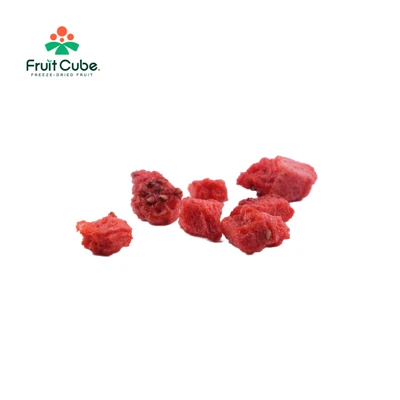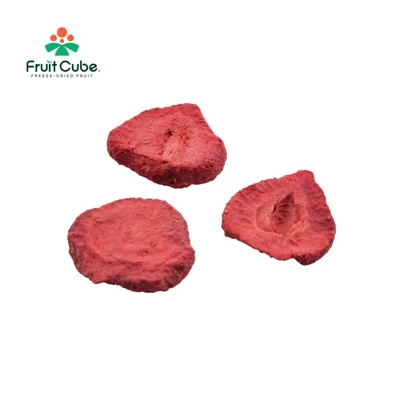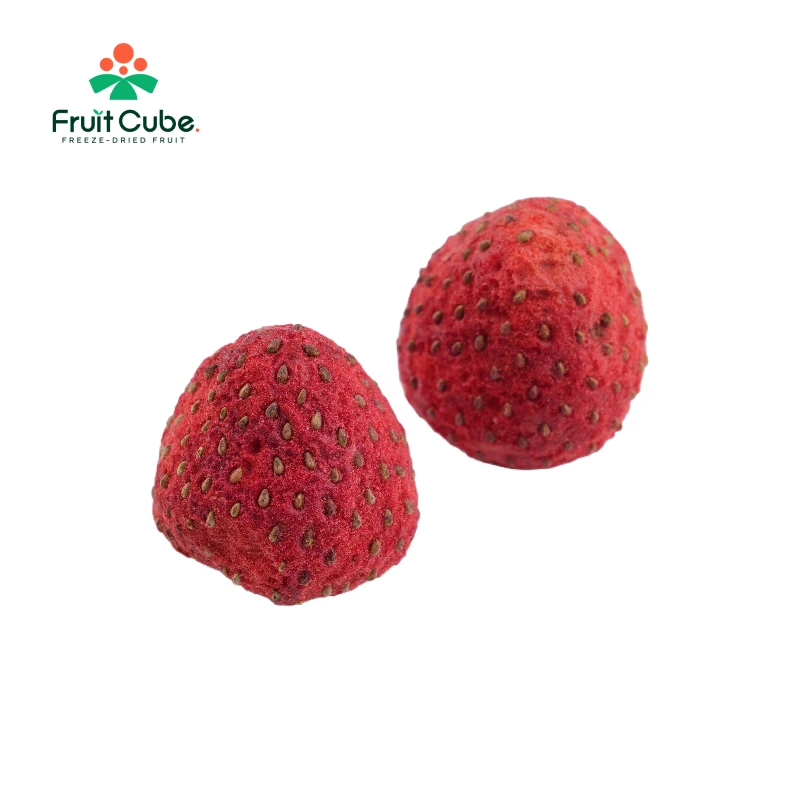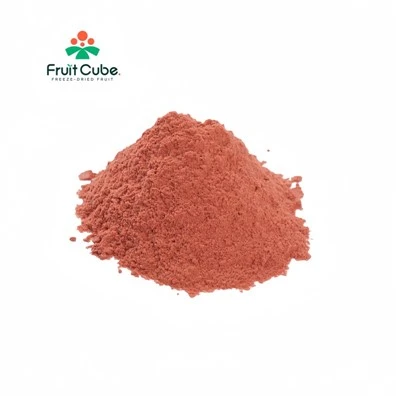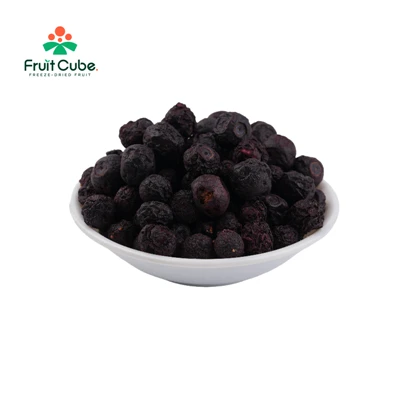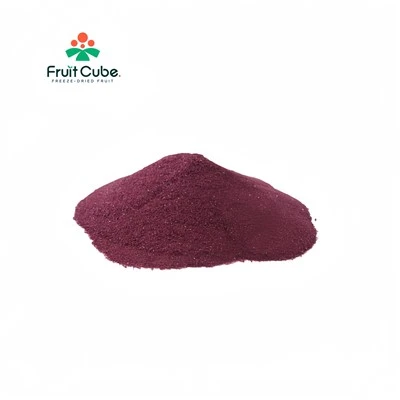
The production of freeze-dried fruit relies on vacuum freeze-drying technology. Its core principle lies in utilizing the direct sublimation of ice crystals under low-temperature conditions to remove water from the fruit from a solid state to a gaseous state without passing through a liquid stage. This allows for long-term stable preservation while maximizing the retention of the raw material's natural properties. This physical process combines principles of thermodynamics, materials science, and food engineering, forming a crucial technological pillar of modern fruit processing.
The process begins with low-temperature freezing. After pretreatment, fresh fruit is rapidly cooled in a freezing environment of -30℃ to -50℃, causing the internal water to form fine and evenly distributed ice crystals. Rapid freezing is significant because it reduces mechanical damage to the cell walls caused by the ice crystals, thus maintaining the porous structure of the fruit pulp during subsequent drying. This is crucial for the crisp texture and rehydration properties of the finished product.
Then comes the vacuum sublimation drying stage. The frozen material is placed in a high-vacuum chamber, and by reducing the ambient pressure below the triple point of water and applying moderately controlled heat, the ice crystals are directly sublimated into water vapor. This process avoids the formation of liquid water, thus significantly reducing nutrient loss and cell structure collapse caused by dissolution and diffusion. The sublimation stage primarily removes most of the free water, initially forming a loose, sponge-like structure in the material.
Subsequently, desorption drying is performed, which involves continued vacuuming at higher temperatures to remove bound water still adsorbed in the pores and between molecules. When the moisture content drops to 2%–5%, microbial activity is limited, the chemical reaction rate decreases significantly, and the material maintains stable quality at room temperature.
From a scientific perspective, freeze-drying relies on low temperatures to protect heat-sensitive components, a vacuum environment to lower the boiling point of water and accelerate gas-phase migration, while the latent heat of sublimation is provided by an external heat source. In this way, vitamins, pigments, aromatic substances, and minerals in the fruit are fully preserved, and the color, flavor, and nutrition are close to those of fresh fruit. Simultaneously, the formation of a porous structure gives the product a lightweight, crisp physical property and good rehydration properties.
In summary, the principle of freeze-drying fruit is to use a combination of low-temperature freezing and vacuum sublimation to avoid the high-temperature damage of traditional heat drying. Under scientific control, it achieves comprehensive optimization of nutritional, sensory, and storage performance, laying a solid theoretical and practical foundation for the production and diversified application of high-quality fruit products.