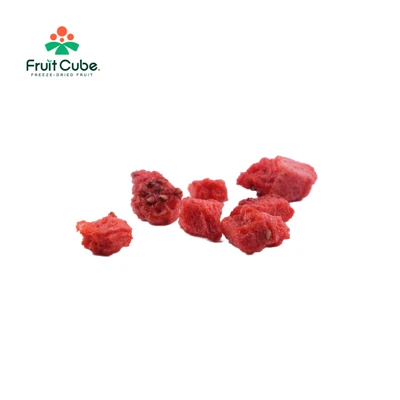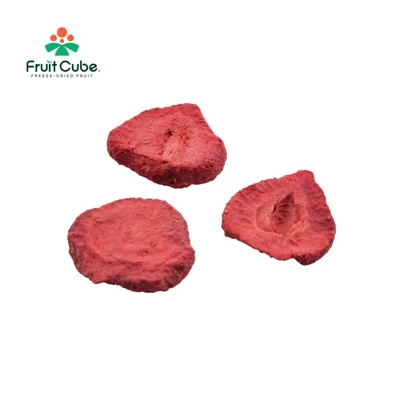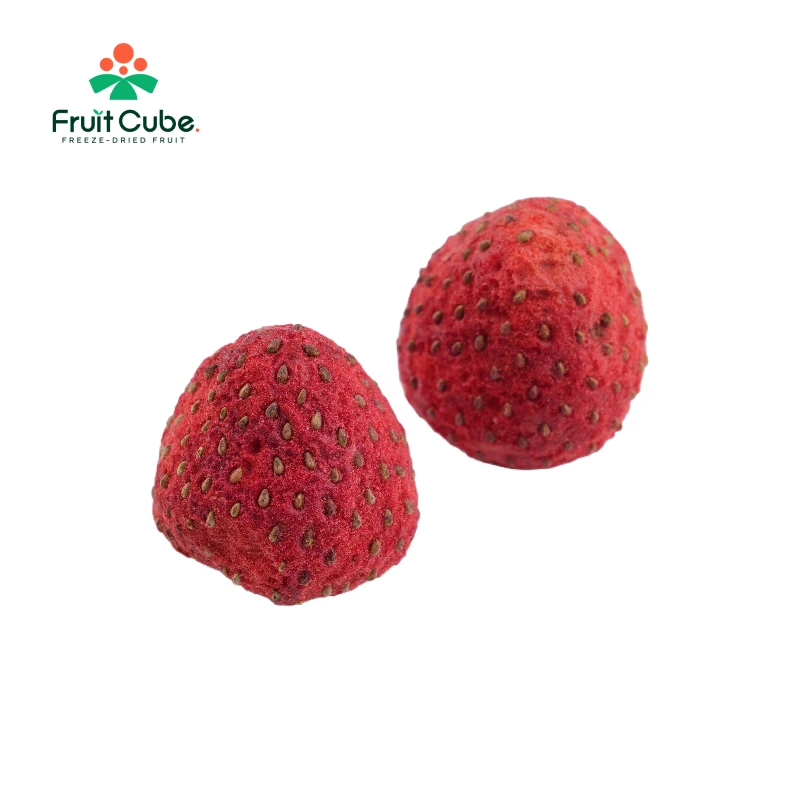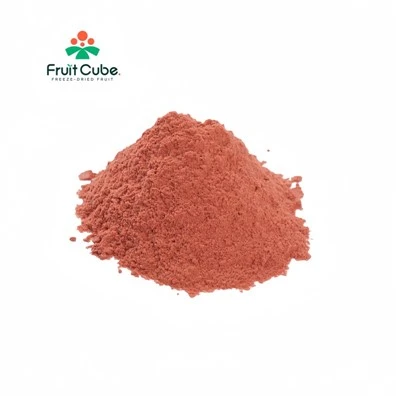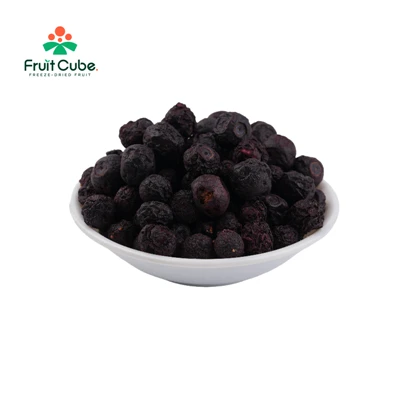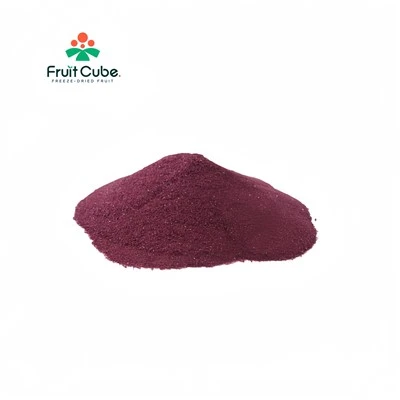
The production of freeze-dried fruit relies on vacuum freeze-drying technology. Through the sublimation of water in a low-temperature, vacuum environment, the complete preservation of the fruit's nutrition, color, and flavor is achieved. The process is rigorous and interconnected, directly determining the quality and stability of the finished product.
First, raw material pretreatment is performed. Fresh fruits of suitable ripeness, free from pests, diseases, and mechanical damage are selected. After washing to remove surface dirt and residue, further processing, such as peeling, pitting, slicing, or dicing, is carried out according to the product's positioning. To prevent oxidative browning, some fruits require soaking in a lightly salted water solution or vitamin C solution, or brief blanching to inactivate enzymes, thus stabilizing color and texture. This homogenization process is fundamental to ensuring the uniformity of subsequent freezing and drying.
Then comes the pre-freezing stage. The treated fruit is placed in a freezing environment of -30℃ to -50℃ for rapid freezing, causing the internal moisture to quickly form tiny ice crystals. This minimizes the damage to cell walls caused by ice crystals, thereby preserving the loose, porous microstructure after freeze-drying. The adequacy of pre-freezing directly affects the efficiency of sublimation drying and the crispness and rehydration properties of the finished product.
The third stage is vacuum sublimation drying, which is the core of the process. A high vacuum environment is created within the freeze dryer, and controlled, gentle heat is applied to the material, causing ice crystals to sublimate directly from a solid state to a gaseous state, removing most of the free water. Precise control of the temperature and vacuum change curves is crucial at this stage to avoid surface overheating that could cause collapse or color deterioration. Afterward, desorption drying is performed, further removing bound water through moderate heating, reducing the final moisture content to 2%–5%, ensuring long-term product stability at room temperature.
Finally, post-processing and packaging are carried out. After drying, the product is cooled to room temperature in a clean environment, removing debris and products with color differences, and undergoing moisture, microbial, and sensory index testing. Qualified products are sealed in oxygen-barrier, moisture-proof, and light-proof packaging materials; nitrogen filling or the addition of deoxidizers may be necessary to extend shelf life. The finished product should be stored in a cool, dry place to prevent moisture absorption and quality degradation.
Overall, the production process of freeze-dried fruit integrates multiple technologies such as biological preservation, thermodynamic control, and food engineering.